Massachusetts Working Families Party Announces Opposition to Question 3, Warns “Jungle Primary” Would Make Elections Less Competitive, Not More
Party says ballot measure trades one broken system for a worse one, and points to real fixes: public financing and same-day voter registration
Boston, MA — The Massachusetts Working Families Party announced its general election endorsements today, including an opposition to Question 3, the November ballot measure that would scrap the state’s party primaries in favor of a “top-two” or “jungle” primary system. MAWFP is calling on voters to vote No.
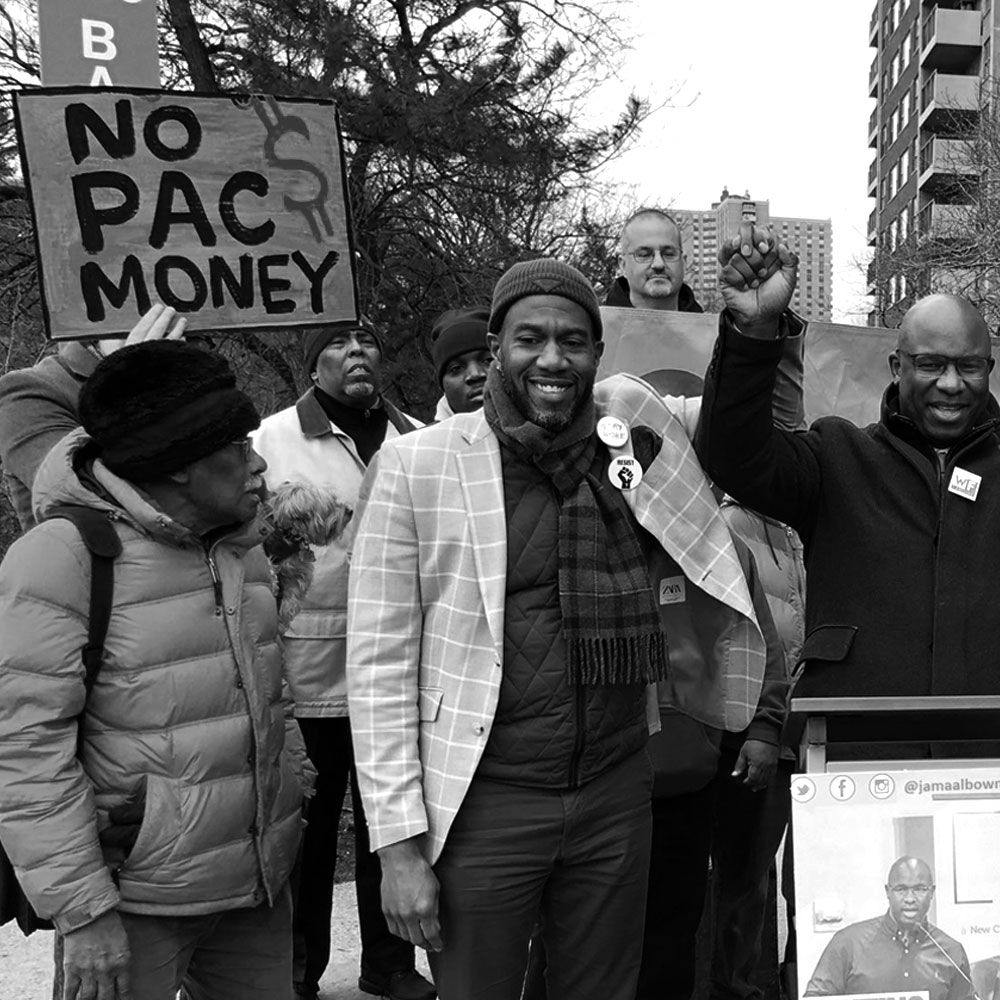
The Party says that Massachusetts elections aren’t competitive enough, and most incumbents never face a real challenge. Question 3 would make that worse, making it harder for working people to run for office by increasing the influence of corporate money and forcing working-class candidates to run longer, more expensive campaigns. A top-two system helps the candidates who can already afford to run that kind of race — wealthier, corporate-aligned candidates — while shutting out first-time and working-class candidates without existing donor networks.
It expands the power of those same wealthy interests in general elections, letting them flood the zone for their preferred candidate in a narrowed field. That’s exactly why those wealthy interests are pushing for it: in Massachusetts, more than 60% of the money raised to pass Question 3 has come from just five private equity executives.
“Let us be extremely clear: Question 3 will not help working people build power in Massachusetts. It will do the opposite,” said Josh Wolfsun, MAWFP State Director. “We need more competition in our elections, but Question 3 is a worse system dressed up as a solution. We’ve seen this exact experiment run in California. It produced longer, more expensive campaigns that made it harder for grassroots candidates to win, and the state legislature moved right because of it. If we want to actually fix what’s broken on Beacon Hill, we know how to do it — public financing, same-day voter registration, and ranked choice voting in primaries.”
Question 3 has been touted by its backers as a solution for minor parties and organizations building political power, like the Working Families Party. Instead, a top-two system would remove third parties’ guaranteed spot for their candidates on the general election ballot, making it more likely for them to get locked out of general elections entirely. This same threat incentivizes voters and donors of any party to consolidate early behind whichever candidate looks likeliest to survive — squeezing out the kind of grassroots, working-class candidates the MAWFP helps recruit, train and run in order to build durable political power for working families.
Top-two primaries have been in place in California since 2010, and the California Working Families Party runs races within that system. The record there is clear: rather than producing more competitive, more representative elections, California’s jungle primary made its legislature more conservative, as Chambers of Commerce and corporate donors gained outsized power to elect business-aligned Democrats over candidates backed by labor and working-class communities. It’s a pattern repeating in Massachusetts, where more than 60% of the money raised to pass Question 3 has come from just five private equity executives.
The Party also announced its endorsement of three general election candidates this cycle. Jack Richardson, the youngest select board member in Falmouth’s history, is challenging Rep. David Vieira in the 3rd Barnstable district, where he’s built his campaign around taking on corporate power for working families on Beacon Hill. Tom Hendrickson, an Agawam City Councilor and the son of two public school teachers, is challenging Rep. Nicholas Boldyga in the 3rd Hampden district to rein in the billionaires and corporations keeping wages down and costs high. Shannon Teabo, a first-time candidate and working mother from Central Massachusetts, is challenging Sen. Peter Durant in the Worcester & Hampshire district to build an economy that works for working families.
The Party also announced its support of Question 1, which would subject the Governor’s office, the Legislature, and the courts to the state’s public records law; Question 2, which lets public defenders and bar advocates at CPCS unionize and bargain collectively; we’re supporting Question 4, which lets voters register to vote on Election Day itself; and Question 9, which upholds the gun safety law the Legislature passed in 2024. Along with Question 3, the Party is opposing Question 5, which would tighten the state’s revenue cap and threaten the funding that pays for schools, healthcare, and other public services; and Question 8, which would roll back marijuana legalization and reinstate criminal penalties.